
Morgan County District Court Overview
Morgan County is part of Colorado's 13th Judicial District, a northeastern Colorado district that also includes Kit Carson, Logan, Phillips, Sedgwick, Washington, and Yuma Counties. The local state court location is Morgan Combined Court in Fort Morgan. The word "combined" is practical: District Court and County Court functions are housed through the same state court location, but they do not have the same jurisdiction.
District Court is the broad trial court for Morgan County. It handles felony criminal cases, civil cases without the County Court amount limit, domestic relations, probate, juvenile matters, mental health cases, and appeals from County Court. County Court handles misdemeanors, many traffic cases, small claims, lower civil matters, protection orders, and early felony complaint stages. Fort Morgan Municipal Court handles city ordinance and municipal traffic cases inside the city.
The Colorado Judicial Branch Morgan County trial court page identifies the state court channel for local trial court information.
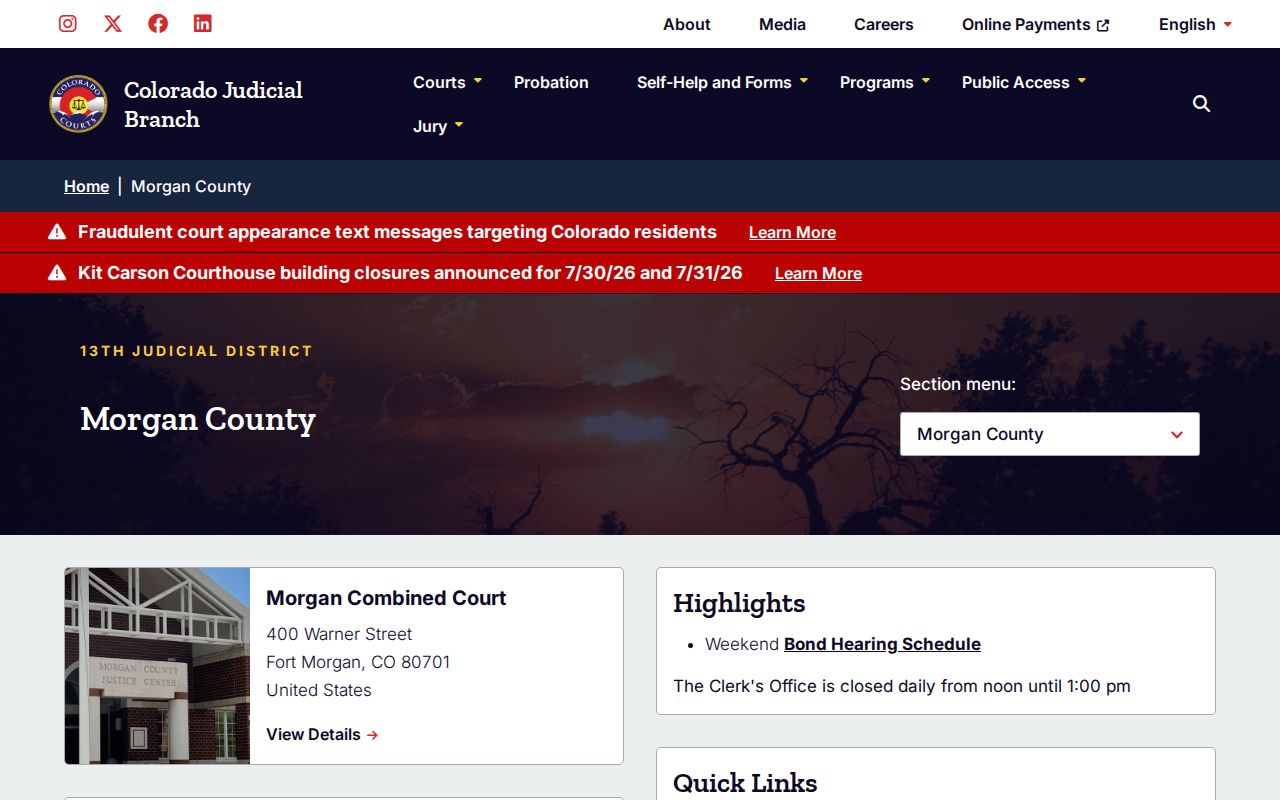
This image documents the official Judicial Branch source used for Morgan County District Court and County Court information.
Morgan County District Court Staff
The District Court judges serving Morgan County are listed by the Colorado Judicial Branch as part of the 13th Judicial District. Some judges work districtwide and may sit in more than one county in the district. Morgan litigants should therefore read notices and dockets carefully, because the judge division and hearing location matter as much as the county name.
| Court or Office | Official Listed Person | Role | Phone or Email |
|---|---|---|---|
| District Court, 13th JD | Carl S. McGuire III | Chief Judge, Division B | 970-522-6565 |
| District Court, 13th JD | Matthew W. E. Bradley | District Court Judge, Division F | 970-345-2756 |
| District Court, 13th JD | Dina M. Christiansen | District Court Judge, Division C | 970-542-5200 |
| District Court, 13th JD | Stevie M.G. Gagliano | District Court Judge, Division A | 970-522-6565 |
| District Court, 13th JD | Robert C. James | District Court Judge, Division D | 970-542-5200 |
| District Court, 13th JD | Kimbra L. Killin | District Court Judge, Division E | 970-762-7010 |
| Clerk of Court | Debra Welsch | Clerk of Court | MorganClerksOffice@judicial.state.co.us; 970-542-5200 x4 |
The Morgan County judges and staff list also names Milla Lishchuk as County Court Judge, Dawn Gerk as Family Court Facilitator, and Stephanie Mayer as Self-Represented Litigant Coordinator.
Morgan County District Court Comparison
Colorado trial courts divide work by subject and severity. District Court is not the only place a Morgan County case can appear. The same courthouse can host District Court and County Court matters, and city cases may sit in Fort Morgan Municipal Court. This comparison helps route a search before a person calls the wrong clerk.
| District Court | County Court | Municipal Court | |
|---|---|---|---|
| Civil cases | Civil cases in any amount. | Limited civil cases and small claims. | City ordinance matters, not general civil filings. |
| Criminal jurisdiction | Felony criminal cases and later felony stages. | Misdemeanors, traffic misdemeanors, and early felony complaints. | Municipal ordinance and city traffic violations. |
| Family and probate | Domestic relations, probate, juvenile, mental health. | Protection orders and limited county matters. | Not the divorce or probate court. |
| Local office | Morgan Combined Court. | Morgan Combined Court. | Fort Morgan Municipal Court. |
Morgan County District Case Flow
A District Court case moves based on case type. A felony case may begin with arrest, summons, or a County Court complaint stage before reaching District Court. A civil case begins with a complaint or petition. A domestic relations case begins with a petition for divorce, legal separation, allocation of parental responsibilities, or related relief. Probate cases often start with an application or petition tied to an estate, guardianship, or conservatorship.
Criminal flow: Arrest or summons › first appearance › filing decision › arraignment › pretrial settings › plea or trial › disposition › sentence › appeal if allowed.
Civil flow: Complaint or petition › service › answer › motions › disclosures or discovery › settlement work › hearing or trial › judgment › appeal if allowed.
Probate flow: Application or petition › appointment or order › notice to interested persons › inventory or accounting › court orders as needed › closing or continuing administration.
Morgan County District Jurisdiction
District Court is the Morgan County forum for the higher-stakes court files in the state trial court system. Felony criminal cases move there for prosecution and sentencing when the matter is not resolved earlier. Domestic relations cases, including divorce and legal separation, are District Court matters. Probate is also handled through District Court, with Debra L. Welsch listed as Probate Registrar. Juvenile and mental health proceedings are District Court matters, but they often carry access limits because of age, medical, or protected-person information.
The court record itself may show case number, court type, division, parties, attorneys, docket events, orders, and disposition. The public docket search can help identify hearing dates and case class, but document copies require the court or the Judicial Branch records request path. Vendor register-of-actions searches can show some case activity, yet the Judicial Branch says those sites do not provide official document copies.
- Disposition
- The current or final outcome of a case or charge.
- Register of actions
- A chronological list of case events, filings, and settings.
- Probate
- The District Court process for estates, wills, guardianships, and conservatorships.
- Domestic relations
- Family case category for divorce, legal separation, parenting, and support issues.
Note: Sealed, juvenile, adoption, mental health, and protected-person records may be unavailable or redacted even when a docket exists.
Thirteenth Judicial District
The 13th Judicial District is larger than Morgan County. Its District Court judges and support roles serve a seven-county region across northeastern Colorado. That regional structure explains why the staff table includes phone numbers outside Fort Morgan and why a Morgan County party may see a districtwide judge assigned to the case. The case remains a Morgan County case when filed in Morgan County, even if the judge's division is districtwide.
Morgan Combined Court
400 Warner Street
Fort Morgan, CO 80701
970-542-5200
Fax: 970-542-7091
MorganClerksOffice@judicial.state.co.us
13th Judicial District Attorney
830 E. Platte Ave., Ste H
Fort Morgan, CO 80701
970-467-0105
Weekdays 8 a.m. to 5 p.m.
Morgan County Lower Courts
Morgan County lower-court routing matters most for traffic, misdemeanor, small claims, and municipal cases. County Court is a Colorado state court and operates through Morgan Combined Court. Fort Morgan Municipal Court is separate and sits in the lower level of the Police Department building at 901 E. Beaver Ave. Its procedures describe first appearance as arraignment, plea options of guilty, no contest, or not guilty, and a pretrial conference where many defendants may speak with the City Attorney.
Municipal Court is not the place for a Morgan County divorce decree, probate file, or felony District Court record. It may be the right place for a city ordinance case, municipal traffic ticket, municipal court docket, or city fine payment. A defendant who pleads not guilty in a jury-eligible Fort Morgan Municipal Court matter must make a written jury request and pay the $25 jury fee within 20 days of the not-guilty plea.
Federal Courts Near Morgan County
Federal courts are separate from Morgan County District Court. A federal criminal prosecution, federal civil case, bankruptcy, federal appeal, or federal prisoner search does not route through Morgan Combined Court. Morgan County is within the U.S. District Court for the District of Colorado for federal trial matters, the U.S. Bankruptcy Court for the District of Colorado for bankruptcy matters, and the U.S. Court of Appeals for the Tenth Circuit for federal appeals.
The U.S. Bankruptcy Court for the District of Colorado is relevant when a person is trying to separate federal bankruptcy records from Morgan County probate or civil records.
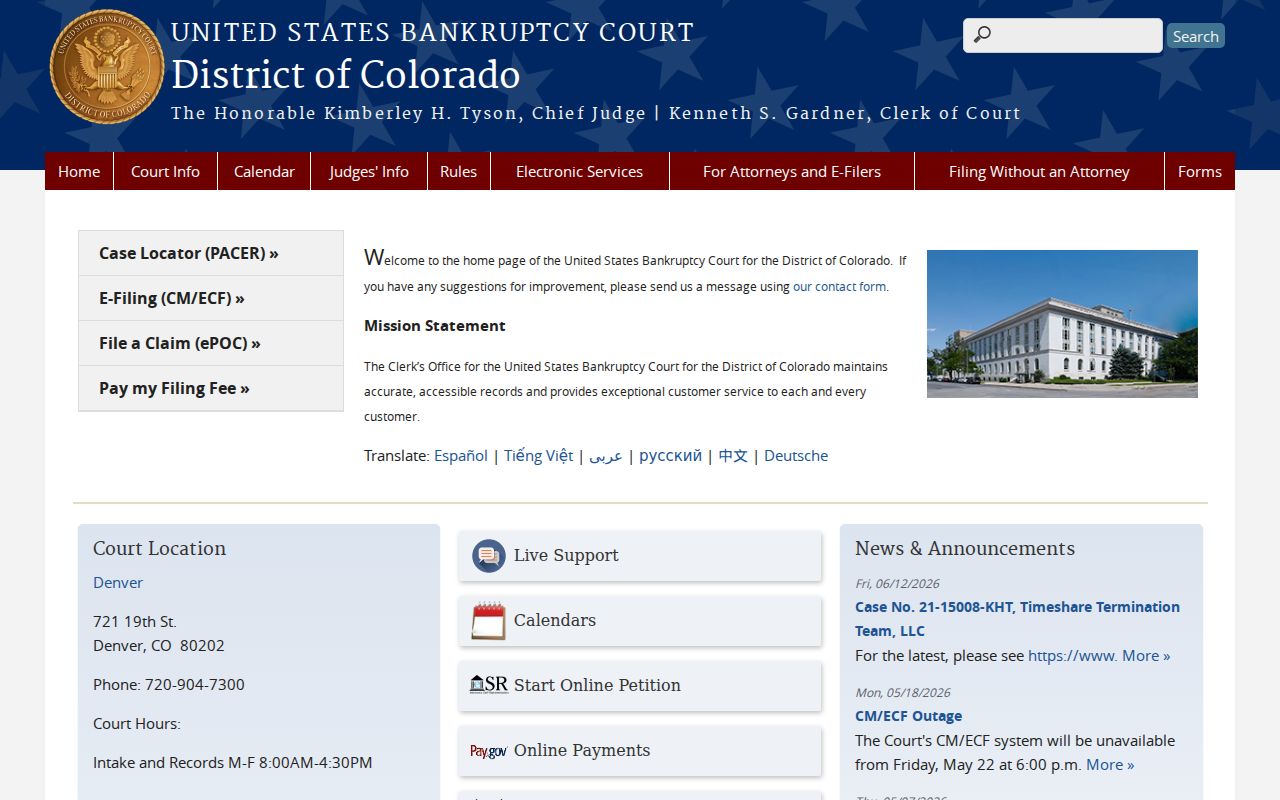
Bankruptcy records are federal records, so they should not be requested from the Morgan County District Court clerk.
The U.S. Court of Appeals for the Tenth Circuit is the federal appellate court, while Colorado District Court appeals follow the state appellate path.
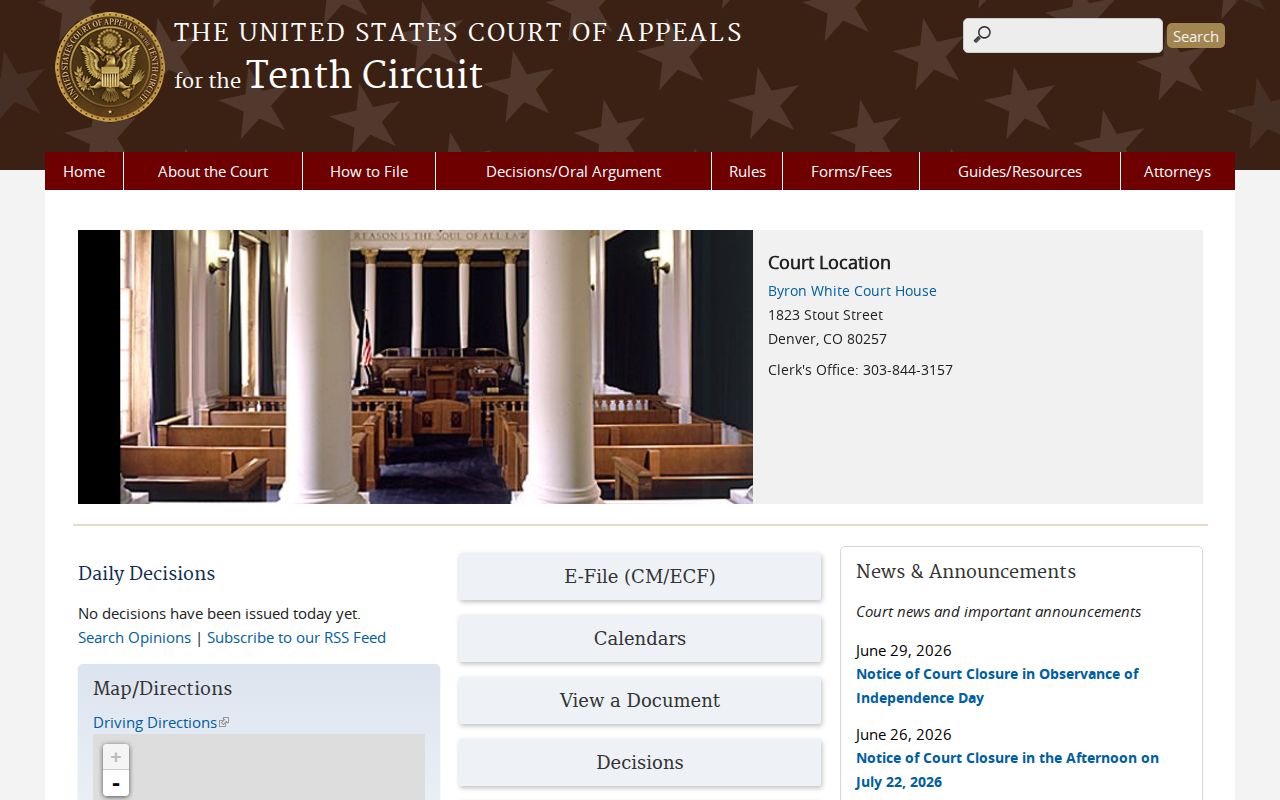
The Tenth Circuit image helps distinguish state District Court files from federal appellate court records.